













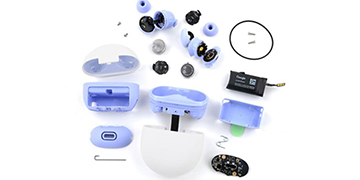
If you bought a pair of headphones last year, congratulations. You now own one of the billion headphones sold globally, all of which are quietly heading towards battery depletion. Most wireless headphones are simply tossed into a drawer once the battery is dead, and for headphones, a dead battery is as inevitable as leaving your left earbud under your car seat.
Google is one of the few companies that has made real strides in product repairability. The Pixel team has partnered with iFixit to provide genuine parts to users and independent repair shops and includes a manual at product launch. This year, the Pixel Watch 4 set a new benchmark for smartwatch repairability. With that momentum, we genuinely hope the Pixel Buds 2a will bring that convenience to the earbud market.
In reality, the Pixel Buds 2a feels like a half-finished product. The earbuds themselves, like most headphones on the market, are riddled with design flaws and difficult to repair, although there are indications that the development team attempted a repairable design in the early stages. However, the charging case is the best we’ve ever seen. Google is moving in the right direction with repairable headphones, but they may need one or two more generations of products to truly perfect them.
Intrusion, intrusion in the literal sense
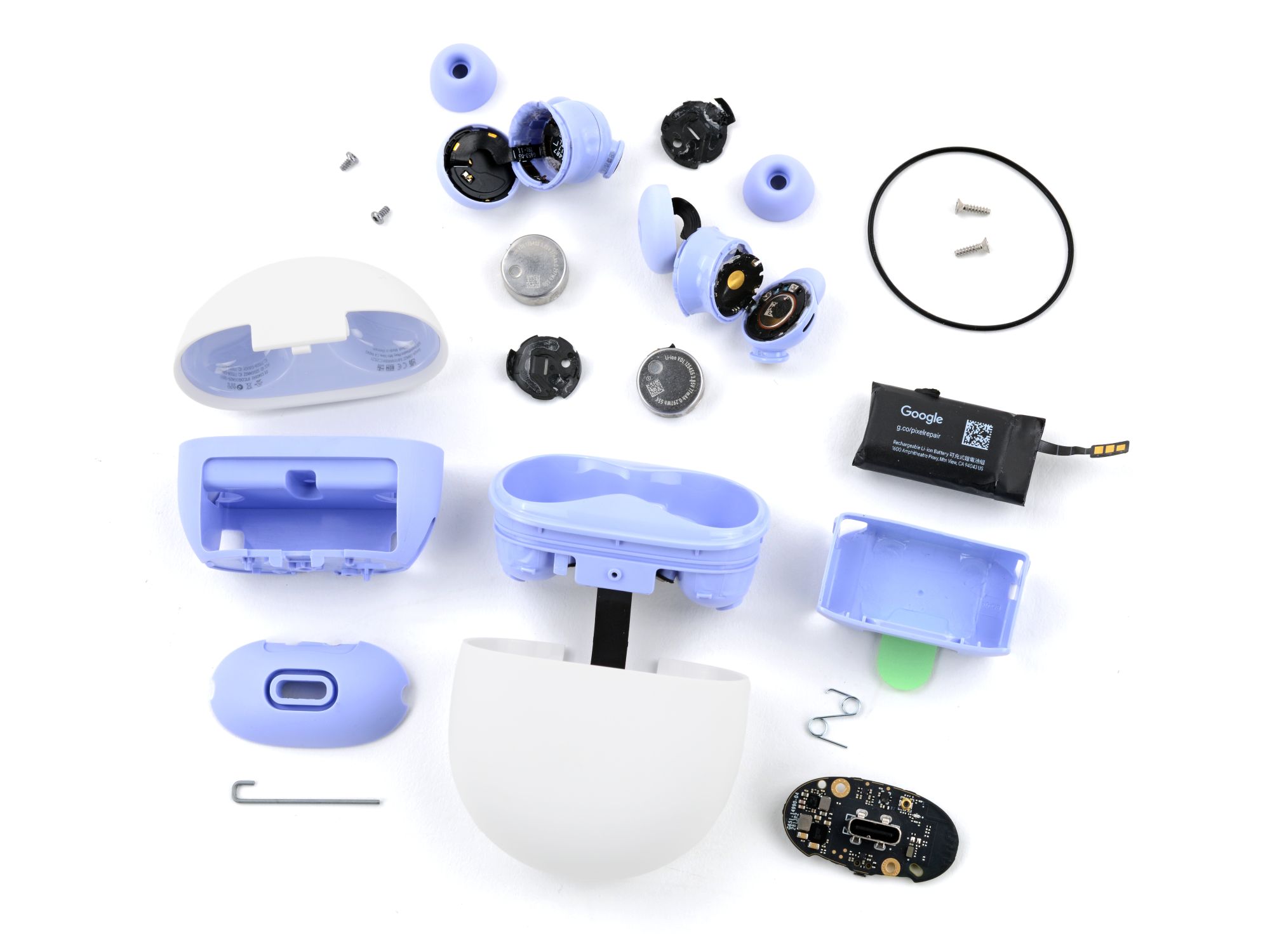
The first half of this product tells a familiar, frustrating story. Like the AirPods 3 (which only scored 0 on repairability tests), the driver unit housing seams are glued together. This gluing method is infuriating, requiring clamps, heating tools, and considerable patience to complete. No one should attempt to repair it at home, meaning the Buds 2a was doomed from the start.
Typically, manufacturers use glue to seal the earbuds for waterproofing. Adhesive has long been an affordable, reusable, and reliable method of waterproofing, but we believe that if companies like Apple and Google took this seriously, they would find alternatives.
After heating, prying, and finally opening it, we found a gasket around the seal. Did this mean anyone ever imagined these earbuds could be opened for repair? Now, that idea is clearly shattered: the plastic is bent and deformed, and the earbuds cannot be perfectly reassembled.
The battery is glued on too tightly, extremely tightly. So tightly that disassembly would damage the housing and the battery itself. Our usual “McGee” method—using isopropyl alcohol and heat—simply doesn’t work.
Unfortunately, this 0.297 Wh button battery does seem to have been designed with replaceability in mind. Its pins are pressed directly onto a flexible circuit board; there are no push-button connectors or solder pads—the interface is clean and simple. How convenient it would be to remove the battery effortlessly!
It feels like the team ran out of time, cobbled together a solution, and then released the product, leaving us like archaeologists digging up a half-finished project. To make matters worse, Google’s official repair manual website even has a “battery replacement guide” for the Pixel Buds 2a. But that guide only applies to the charging case.
The indictment case: an unexpected plot twist
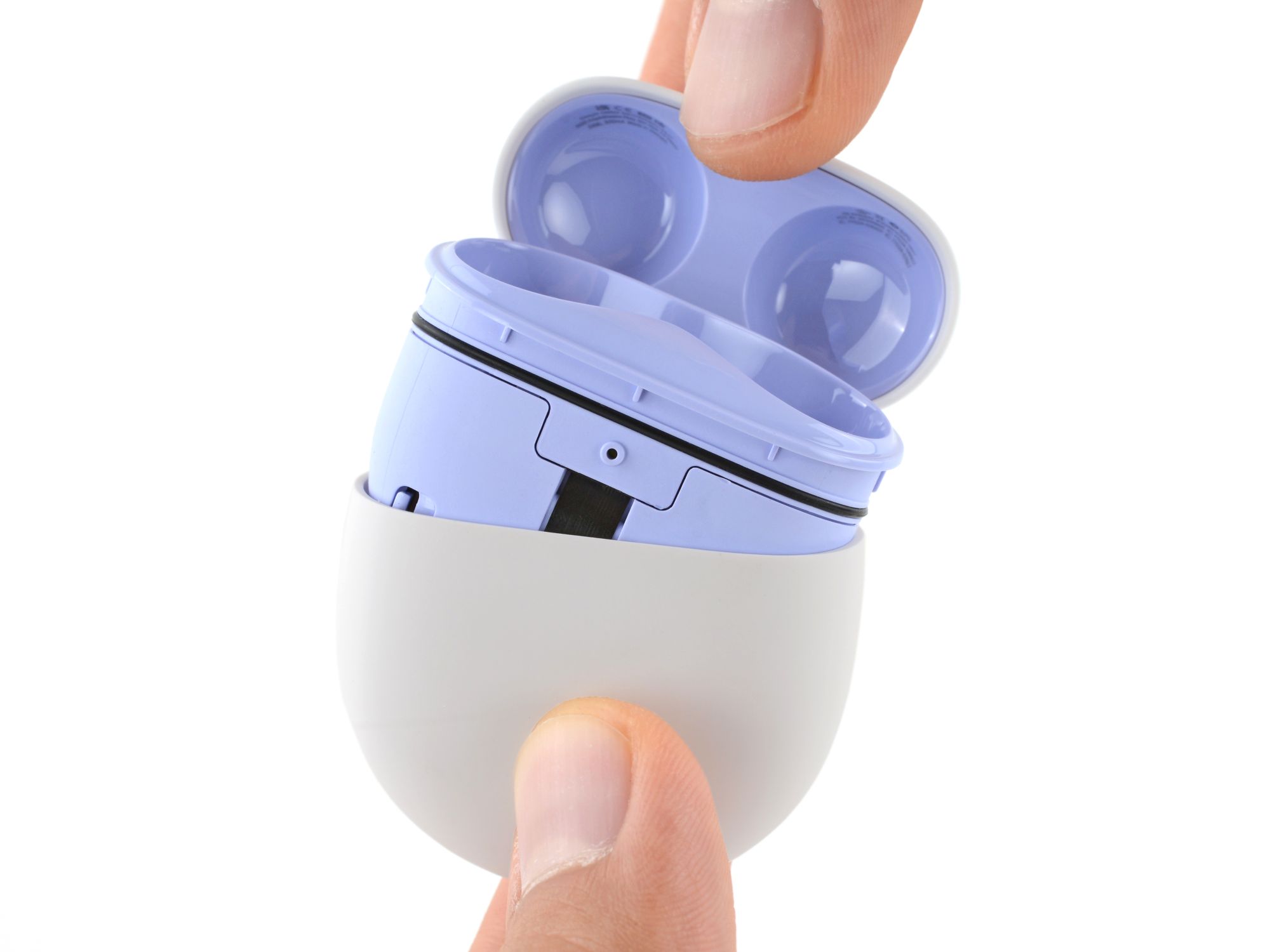
If the earbuds themselves are disappointing, the charging case will definitely impress. Opening the lid reveals two clearly positioned, easily removable Torx screws. Unscrewing them allows the entire internal assembly to slide out gracefully, prompting the question: why weren’t the earbuds designed this way? This contrasts sharply with designs that deliberately hide screws. We simply can’t understand those designs—this one is fantastic!
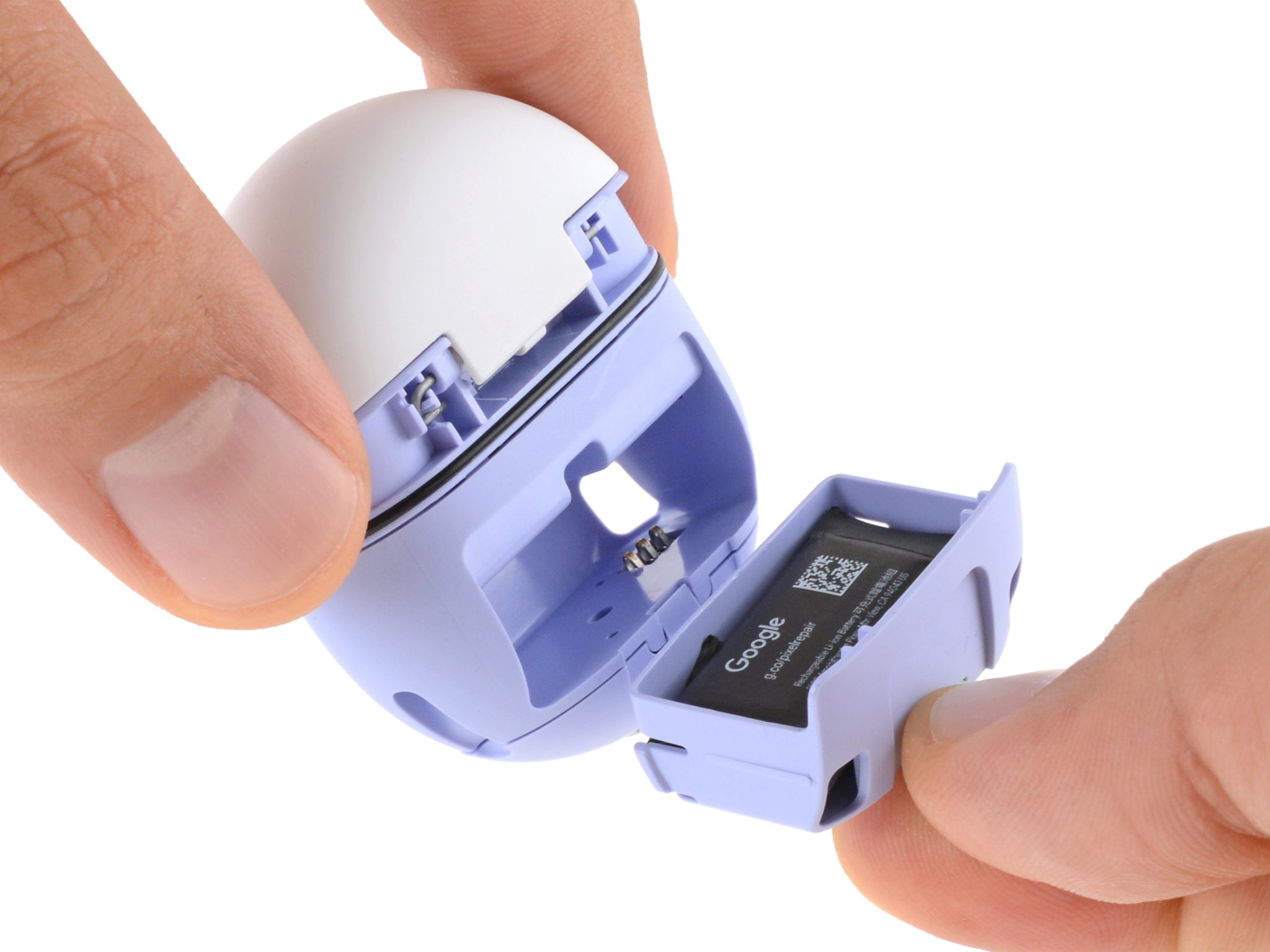
Absolutely no glue. Replaceable sealing rings provide IPX4 splash resistance, enough to handle rain or sweat. At the heart of all this is a 1.53Wh battery, easily removed by pulling a tab on the tray in Google’s new mint green color, used in Pixel products to identify removable internal components. No pry bar needed, no cursing required.
Fairbuds, from Fairphone, a company focused on sustainable electronics, set a high bar. In fact, it’s the first time in this review that it received a perfect 10/10. We especially loved its modular design and easy-to-repair charging case. But Google’s charging case surpasses the Fairbuds in some aspects. Simply unscrewing two screws opens the interface and circuit board, and with a push-button connector, the entire charging case is fully repairable.
The contrast between the charging case and the earbuds themselves is simply comical. On one side, there are well-designed, easily repairable components; on the other, it looks like a puzzle box glued together, with the battery almost soldered on.
Repair Manual
So, where do the Pixel Buds 2a stand in the broader realm of repairability?
Following our teardown of the iPad Pro M5, this device feels like yet another example of the repair paradox (or, as some astute commentators have put it, the repair paradox). There’s clear evidence that the design team set repairability goals from the outset. They fully achieved those goals with the earbud housings. But with the earbuds themselves, they fell far short.
However, hope remains. Google has a proven track record of releasing repairable products and comprehensive repair manuals in recent years. Judging from the design language of the 2a Buds, they seem to have considered replaceable batteries as well. They just didn’t quite manage to implement it this time.
Currently, the Pixel Buds 2a’s repairability score is tentatively set at 4 out of 10.
If long-term repairability is your top priority, you might want to look elsewhere. But we’re cautiously optimistic that the next generation of Google earbuds might finally come with the replaceable batteries they deserve.